
JSE Market Brief: Rate Hold, Oil Pressure and Resource Stocks Weigh on South African Equities
South Africa's JSE All Share Index fell 1.79% in July as the SARB unexpectedly held interest rates steady despite rising inflation and higher oil prices. Here's what the latest market movements mean for investors and businesses.
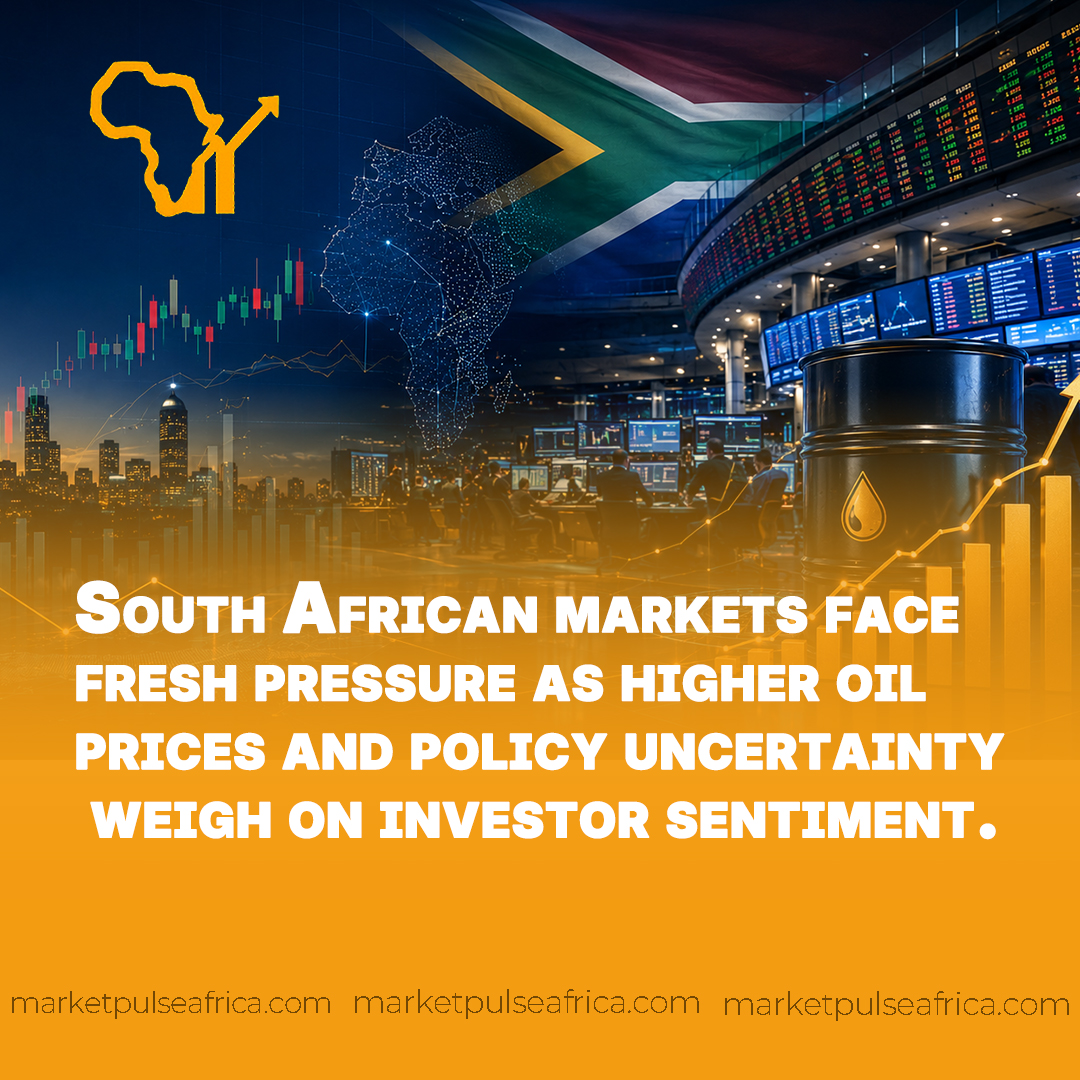
JSE Market Brief: Rate Hold, Oil Pressure and Resource Stocks
Executive Summary
South African equities closed July on a weaker footing as the Johannesburg Stock Exchange (JSE) All Share Index declined 1.79% to 108,349.44. Investor sentiment was dampened by the S8888djdjjdjcdjndjfnfdsossssssssjbdwbdbhkfeqhbfeqbkfqeBK(SARB) surprise decision to keep its benchmark repo rate unchanged at 7.00%, alongside higher oil prices and persistent inflationary pressures.
JSE Performance
Market Ends July Lower
The JSE All Share Index finished July at 108,349.44, reflecting a monthly decline of 1.79%.
The market came under pressure as investors reassessed expectations for monetary policy following the SARB's latest decision, while rising energy prices weighed on resource and industrial stocks.
Metric | Value |
|---|---|
JSE All Share Index | 108,349.44 |
Monthly Change | -1.79% |
Period | July 2026 |
SARB Holds Interest Rates
Monetary Policy Committee Keeps Repo Rate at 7%
The South African Reserve Bank's Monetary Policy Committee voted 4–2 to leave the benchmark repo rate unchanged at 7.00% during its July meeting.
Two committee members supported a rate increase, highlighting continued concerns about inflation risks.
Governor Lesetja Kganyago stated that policymakers preferred to evaluate whether recent inflationary pressures would prove temporary before tightening monetary policy further.
Indicator | Value |
|---|---|
Repo Rate | 7.00% |
MPC Vote | 4–2 |
Decision Date | July 23, 2026 |
Inflation Remains Above Target
Fuel Prices Continue to Drive Consumer Inflation
South Africa's headline inflation accelerated to 5.0% year-on-year in June, reaching its highest level in nearly two years.
Higher fuel prices remained the primary contributor to inflationary pressure, although the SARB lowered its average inflation forecast for 2026 to 4.0%, down from 4.4% previously.
The central bank expects inflation to remain above 4% until early 2027.
Inflation Indicator | Value |
|---|---|
June Inflation | 5.0% |
SARB Target | 3% ±1 percentage point |
2026 Forecast | 4.0% |
Outlook for South African Markets
Investors Await Fresh Inflation Data
Attention now turns to South Africa's next inflation report scheduled for 19 August 2026, followed by the SARB's next monetary policy announcement on 23 September 2026.
Future interest rate decisions are expected to remain data-dependent, with markets closely watching inflation, oil prices and the performance of the rand.
Why It Matters
The SARB's decision to keep borrowing costs unchanged signals that financing conditions will remain relatively tight for businesses.
Combined with elevated oil prices and above-target inflation, the weaker rand could increase import costs while supporting export-oriented companies.
Businesses and investors should continue monitoring monetary policy, inflation trends and commodity prices as key drivers of South African market performance during the remainder of 2026.
Market Snapshot
Indicator | Value |
|---|---|
JSE All Share | 108,349.44 |
Monthly Performance | -1.79% |
SARB Repo Rate | 7.00% |
Inflation | 5.0% |
Inflation Forecast | 4.0% |
Next SARB Meeting | September 23, 2026 |